
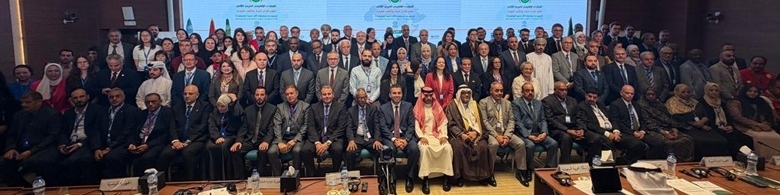
The Second Arab Regional Forum on Early Warning Systems and Disaster Preparedness opened on Monday, 12 October, at the Royal ASBU Hotel in Tunis. Organized by the League of Arab States and hosted by the Arab States Broadcasting Union (ASBU), in partnership with the United Nations Office for Disaster Risk Reduction (UNDRR), the three-day forum brings together regional and international organizations working in disaster risk reduction, preparedness and humanitarian response.
The forum aims to strengthen Arab cooperation and advance early warning systems, with a particular focus on moving beyond the issuance of warnings towards anticipatory action that protects lives and livelihoods. Discussions also address the role of technology, innovation and partnerships in responding to increasingly complex and interconnected risks.
.jpg)
.jpg)
League of Arab States: Investing in Early Warning Is Essential
Dr. Mohamed Saleh Ben Aïssa, Head of the League of Arab States’ Centre in Tunis, stressed that the Arab region faces a growing range of interconnected and complex hazards, including earthquakes, floods, wildfires, sandstorms, heatwaves, drought, desertification and water scarcity, as well as compound crises involving climate, economic and humanitarian factors.He underlined that investment in early warning systems, preparedness and response is essential to protecting lives and property while safeguarding development gains.
Building on the first Arab Regional Forum, held in Cairo in December 2025, the Tunis meeting provides an opportunity to assess progress and identify practical next steps. Dr. Ben Aïssa also called for stronger data and knowledge sharing, improved monitoring and forecasting capabilities, and clear, timely warnings that reach all segments of society and are linked to practical preparedness and response plans.
.jpg)
Tunisia Advances Towards a Multi-Hazard Early Warning System
Mr. Chokri Khalifi, Director of Urban Water Management at Tunisia’s Ministry of Equipment and Housing, highlighted the growing impact of climate change on the country. These challenges include intense rainfall over short periods, recurrent flooding, drought, water scarcity, desertification, rising temperatures and wildfires.He announced that Tunisia has moved from the planning stage towards implementation of a national multi-hazard early warning system. A roadmap has been developed, alongside the establishment of a national technical committee chaired by the National Institute of Meteorology and the National Office of Civil Protection, bringing together the relevant institutions.
Three pilot locations have been selected for the initial phase: Tunis, Ghardimaou and Kebili. These areas face different natural hazards, making them suitable for testing the system before its potential expansion to other regions. Mr. Khalifi emphasized the importance of sharing climate data and harnessing advanced technologies, including artificial intelligence, to improve forecasting accuracy and ensure that warnings reach the public rapidly and effectively.
.jpg)
ASBU Highlights the Media’s Vital Role in Early Warning and Disaster Preparedness
ASBU Director-General Eng. Abdelrahim Suleiman emphasized the essential role of the media in early warning systems and disaster preparedness. He noted that the media’s responsibility extends beyond broadcasting alerts when disasters strike to fostering a culture of prevention, raising risk awareness and delivering accurate, reliable information at the right time.He called for media organizations, particularly radio and television broadcasters, to be recognized as active partners in the design and implementation of early warning plans. Stronger coordination with the relevant authorities, clear warning messages and communication strategies tailored to the needs of different population groups are key to ensuring that warnings lead to effective action. Eng. Suleiman also highlighted ASBU’s efforts to train journalists in disaster and climate change reporting, as well as its participation in relevant regional and international initiatives. He further stressed the importance of preserving the radio and television broadcasting frequencies used for free-to-air services, which remain essential for ensuring that emergency warnings reach the population without subscription barriers, particularly the most vulnerable communities.
.jpg)
UNDRR Calls for Action to Match Commitments
Ms. Sandra Amelang, Head of UNDRR’s Regional Office for Arab States, pointed to the floods, wildfires and extreme weather events experienced across the region since the first forum in Cairo as further evidence of the urgent need to strengthen preparedness and sustain investment in early warning systems.She stressed that the consequences of disasters are significantly shaped by decisions taken before they occur, making prevention and anticipatory action fundamental to protecting lives and development gains. Ms. Amelang called for a shift from commitments to implementation and from expanding coverage to ensuring quality. With 2027 approaching as an important milestone for the Early Warnings for All initiative, she emphasized the need to identify existing gaps, strengthen institutional capacities and prioritize people and communities that remain inadequately protected.
.jpg)
Iraq Calls for Stronger Arab Cooperation in Crisis Management
Lieutenant General Dr. Jaafar Al-Battat, Head of Iraq’s National Centre for Crisis and Disaster Management, called on the League of Arab States to promote stronger crisis leadership and management structures at the regional level.
He noted that the challenges facing Arab countries extend beyond natural disasters to include complex, cross-border crises that require sustained coordination and cooperation among states.
Dr. Al-Battat presented Iraq’s experience in establishing a national crisis and disaster management centre that brings together relevant ministries and institutions and adopts an integrated approach covering all phases of a crisis: before, during and after an emergency. He stressed that exchanging plans and expertise and developing a shared regional vision would strengthen Arab countries’ ability to manage crises and reduce their impact. He also called for translating meetings and agreements into concrete action, with particular attention to climate change, drought and water scarcity and their consequences for communities and critical sectors.
.jpg)
European Commission Stresses Prevention and Preparedness
Mr. Giovanni Di Girolamo, Head of the Middle East and North Africa Unit at the European Commission’s Directorate-General for European Civil Protection and Humanitarian Aid Operations (DG ECHO), highlighted prevention, preparedness and cooperation as essential pillars of disaster risk reduction.He noted that the scale of certain emergencies can exceed the capacity of any single country, underscoring the value of coordinated regional and international responses.
Drawing on European experience in civil protection and humanitarian assistance, he pointed to opportunities for strengthening cooperation between countries and regions, including through the European Union Civil Protection Mechanism, which has been mobilized to support efforts to combat wildfires in Tunisia. Mr. Di Girolamo called for more practical cooperation, greater exchange of expertise and consideration of joint disaster response arrangements. He emphasized that anticipatory action can limit damage before disasters occur and that cooperation should be reciprocal, allowing all partners to learn from one another’s experience.
.jpg)
League of Arab States Recognizes ASBU’s Contribution
At the conclusion of the opening session, the League of Arab States presented a special recognition to Eng. Abdelrahim Suleiman, in appreciation of ASBU 's role in hosting the forum and contributing to its successful organization.The recognition also acknowledged ASBU’s efforts to raise awareness of early warning systems and disaster risk reduction across the Arab media landscape, as well as its contribution to initiatives promoting joint Arab action.Through the forum, participating institutions are seeking to strengthen regional cooperation and turn early warning commitments into practical measures that help communities anticipate hazards, prepare effectively and protect lives and livelihoods.
.jpg)